Figured out a topic to write about? Now what? Where do you start once you have narrowed down an idea? Well, you’re in luck! Let’s look at one way you can begin to develop details of a personal story through describing the scene using all five senses:
“Adding Details Through Questioning”
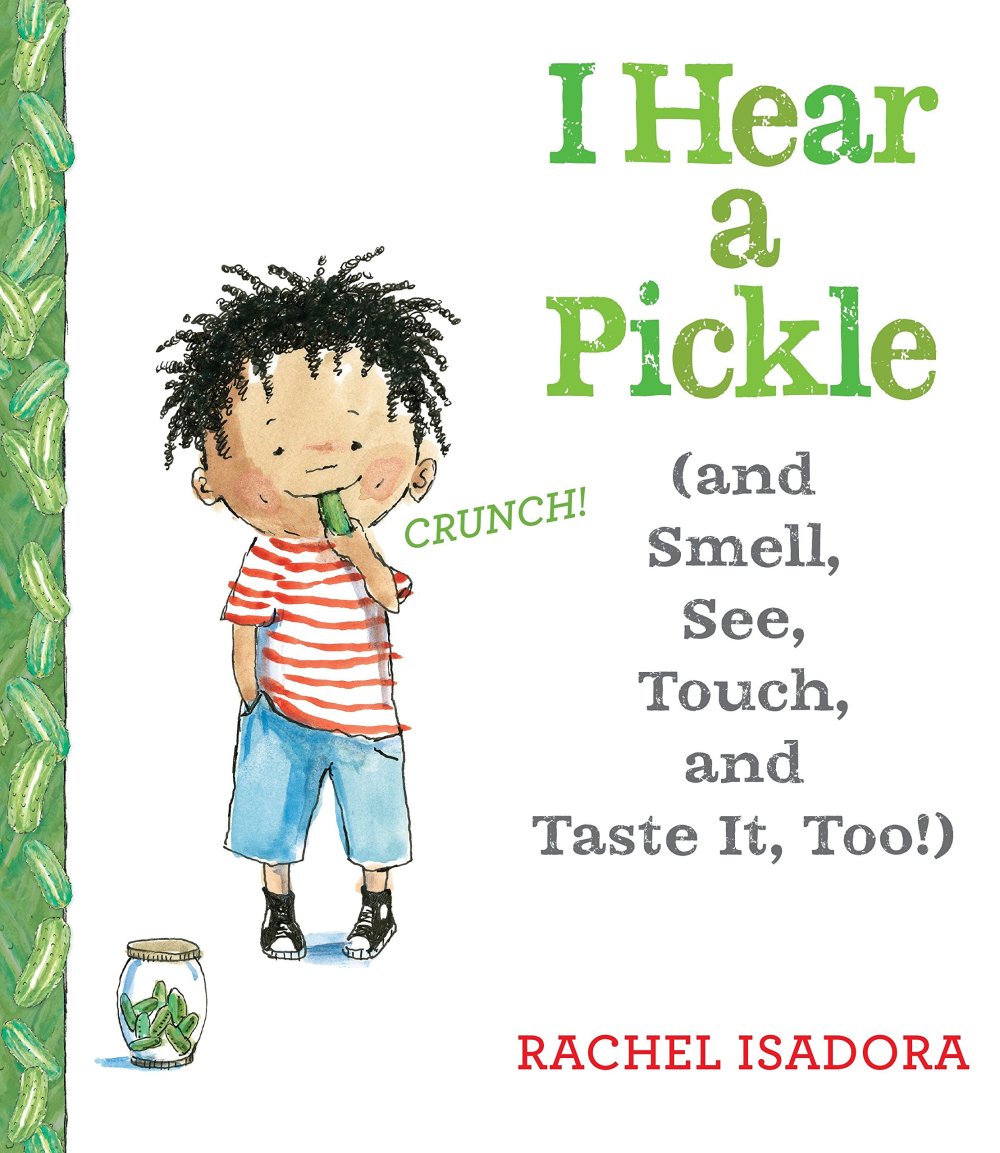
- Hook: Read aloud Rachel Isadora’s book I Hear a Pickle: (and Smell, See, Touch, and Taste It, Too!) which shares all sorts of sights, sounds, tastes, smells, and feelings. Next I would take students on a walk around the school and ask them to write down all of the details they notice for their five senses on our walk in their writer’s notebook. When we get back to the classroom I would have students work in small groups to come up with lists for each sense and some details that they wrote down.
- Purpose: Writing with our senses allows us to portray the moment as if the reader were there in the moment with the author. Today I will show you how to add details through our senses as we write. By recording all descriptions of the moment, we can transport ourselves and the readers back in time.
- Brainstorm: Ask students to refer back to their notebooks and find three ideas that they might want to develop into personal narrative stories. Once they have put sticky notes on their three possibilities, tell students to partner up within the writing community and share their three with the other writer. Students can help each other figure out which story they would like to expand upon.
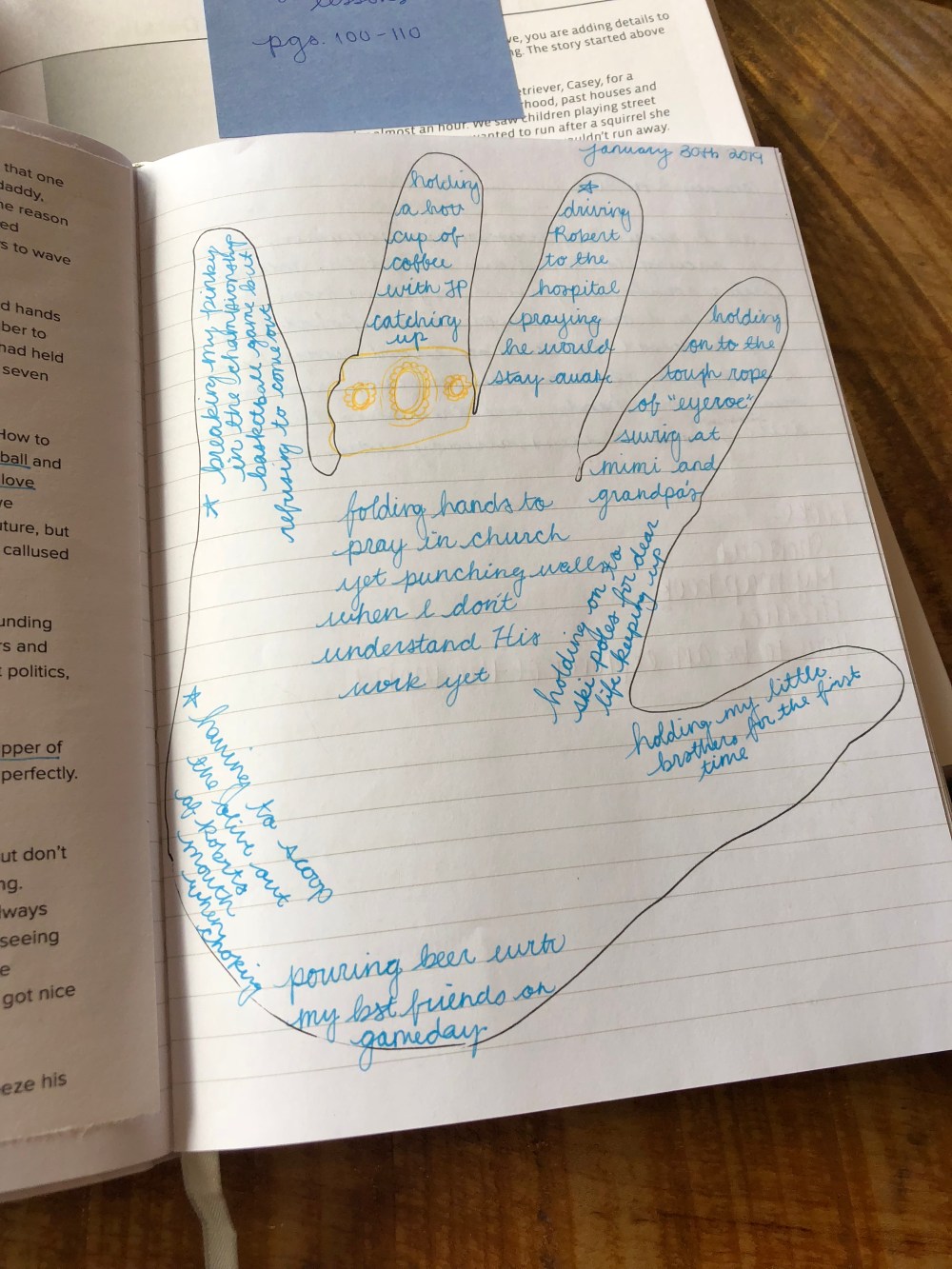
- Model: Share your three ideas that you chose as possible narrative ideas and model your thought process and why you chose the topic that you did.
- Writers, today I would like to share how I developed an idea into more details in order to describe to my readers the exact experience that I had. I picked out three possible stories to expand upon which were: (a) When I went to my younger brother’s play, (b) the soccer game when I got a bad concussion, and (c) when my friend got really hurt and had to get staples in his head. After conferencing with a peer, she wanted to know more about how my friend got hurt and she wondered if he was alright. I also felt as though I could thoroughly describe the situation because it was the most recent and I remembered it vividly.
- Ask students what questions they have about the incident and record your answers and details on a chart that separates the senses into their own categories.

- Shared/Guided Writing: Ask students to make their own senses chart and list some details under each for their small moment. Have a pair of students model a conference where one student writes their chart on the board and explains the moment. The partner will listen respectfully and then have the chance to respond and ask more expanding questions that they have. The other students in the class might have questions as well. Then the student will add more details to their chart on the board and have more to help describe the moment in depth. Then the rest of the class will partner up and have their own writing conferences. An alternative would be to have students lay out their writer’s notebooks to the page with their senses chart and have a gallery walk where students can use sticky notes to ask questions or add possible details to their peers journals.
- Independent Writing: Students can return to their desks and writer’s notebooks and look over their peers questions or comments. They can then take the time to ask themselves questions and answer them by adding onto the senses chart. This is a time where students are able to put together more writing based on their own personal observations as well as their peers.
- Reflection:
- How does describing all five senses help you develop your writing?
- Were you able to ask deepening questions to yourself and your peers once you began thinking with all of your senses?
- How did this strategy work for your writing when creating a detailed small moment narrative?
Isadora, R. (2016). I hear a pickle: and smell, see, touch, and taste it too! New York, NY: Nancy Paulsen Books.
 Let's Talk Lit
Hi, Kaitlin!
I really enjoyed your choice of mentor text and how you are using it to help kids develop their stories! Adding in details that have to do with the senses is a great way to get students to revise and be more precise in their writing! I like the graphic that you included of how you developed your own writing piece. Great job!
LikeLike
The book you chose for this lesson is the CUTEST! I actually pulled up a read aloud on YouTube and it is perfect for what you are trying to teach. I think that its cool that you added the five senses into your questioning and detail lesson. I think this is a great way for children to learn how to add details into their writings! I also think using the graphic organizer and your example in your own writers notebook will be super helpful for children who learn by visuals! Thank you for sharing your lesson! I LOVE IT!!!
LikeLike